
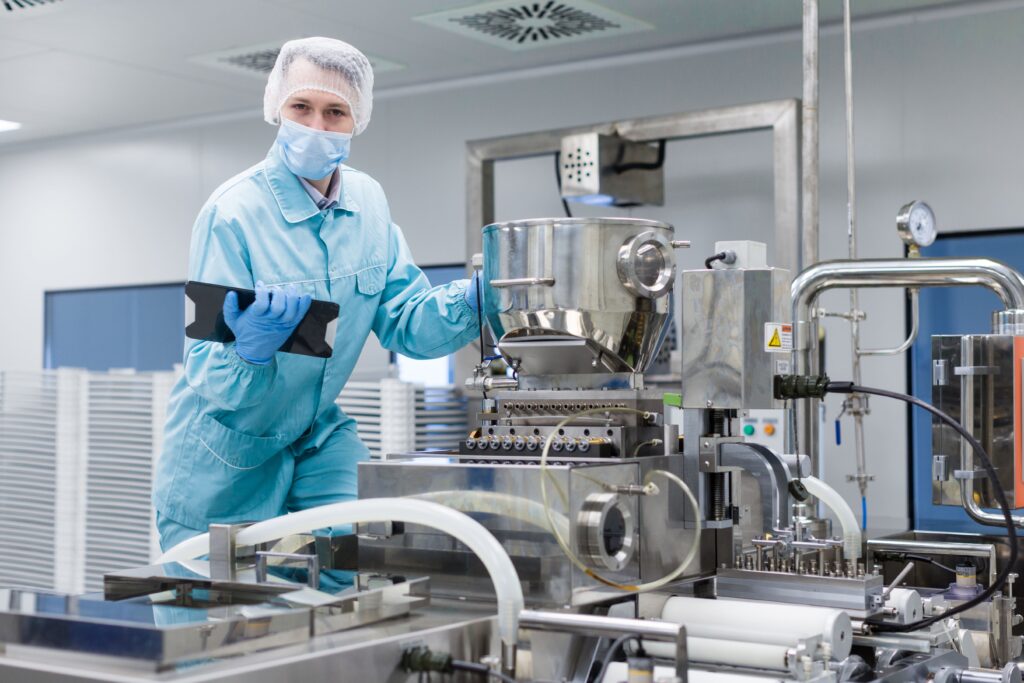
Pharmaceutical manufacturing is a cornerstone of modern healthcare, and within this industry, tablets stand out as one of the most widely produced and consumed dosage forms. Tablets offer a convenient, stable, and cost-effective means of delivering medications, making them essential in meeting the global demand for accessible healthcare solutions. However, creating high-quality tablets is far from straightforward. The tablet-making process requires meticulous attention to details, combining advanced scientific knowledge, precision engineering, and rigorous quality control to ensure safety, efficacy, and compliance with stringent regulatory standards.
Understanding and mastering this process is vital for pharmaceutical manufacturers aiming to deliver consistent, effective and safe products to patients. This article explores the complexities of tablet manufacturing, offering a comprehensive guide through production processes, challenges and innovations that define this critical aspect of pharmaceutical production.
Introduction to Tablet Manufacturing
Tablets are preferred dosage form due to their convenience, stability, and cost-effectiveness. According to a report by Fortune Business Insights, the global tablet market size is projected to reach USD 95.1 billion by 2028, growing at a compound annual growth rate (CAGR) of 6.3%. This highlights the importance of understanding demanding production processes in order to meet increasing global demand.
The tablet-making process can be broadly divided into three stages:
- Preformulation and Formulation Development: Ensuring the right blend of active pharmaceutical ingredients (APIs) and excipients.
- Manufacturing Process: Converting raw materials into tablets through processes like granulation, compression, and coating.
- Packaging and Quality Assurance: Protecting the tablets and ensuring compliance with regulatory standards.
Mastering these stages requires a deep understanding of the science behind each process and the technological innovations that enhance efficiency and quality.
Preformulation and Formulation Development
Understanding the Role of APIs and Excipients
Developing a robust tablet formulation begins with understanding the unique characteristics of APIs and excipients:
- APIs (Active Pharmaceutical Ingredients): APIs are the therapeutic agents in a tablet. For example, ibuprofen in pain relievers is the API. Its solubility, stability, and bioavailability dictate its performance and patient outcomes.
- Excipients: These non-therapeutic components ensure the tablet’s structural integrity and optimize its therapeutic effect. Examples include binders (e.g., microcrystalline cellulose), disintegrants (e.g., sodium starch glycolate), and lubricants (e.g., magnesium stearate).
Real-life Example: For extended-release tablets like metformin ER, carefully selected excipients control the drug release over time, ensuring consistent blood glucose levels in diabetic patients.
Conducting Critical Pre-formulation Studies
Preformulation studies assess the compatibility and behavior of APIs and excipients. Key tests include:
- Flowability and Compressibility: Ensures powders form uniform tablets during compression. Poor flowability may lead to uneven tablet weight.
- Moisture Content Analysis: Prevents degradation caused by hygroscopic materials. A classic example is aspirin, which hydrolyzes in the presence of moisture.
- Particle Size Distribution: Smaller particles may dissolve faster, enhancing bioavailability, as seen in nano-sized drug formulations.
Statistics: A study by the Journal of Pharmaceutical Sciences reveals that 75% of tablet failures are attributed to improper API-excipient interactions, emphasizing the importance of preformulation research.
Choosing Effective Formulation Techniques
The choice of formulation method depends on the API’s properties and therapeutic objectives:
- Direct Compression: Ideal for APIs with good flow properties. For example, ibuprofen tablets are often manufactured this way.
- Wet Granulation: Commonly used for APIs with poor flowability. The addition of binders like PVP (polyvinylpyrrolidone) enhances granule cohesion.
- Dry Granulation: Suitable for moisture-sensitive drugs, such as aspirin.
Manufacturing the Tablets: Process and Optimization
Blending for Uniformity
Blending ensures homogeneity in the API and excipient mixture. Variations can compromise tablet quality.
Key Techniques:
- Tumbling Mixers: Used for low-shear blending to prevent overmixing.
- High-shear Mixers: Suitable for cohesive powders.
Real-life Application: In anti-diabetic drugs like glimepiride tablets, precise blending ensures consistent dosing and therapeutic efficacy.
Granulation Techniques for Improved Properties
Granulation is a crucial step in tablet manufacturing, helping to improve flowability, compressibility, and uniformity of the powder mixture. The main granulation techniques are:
1. Wet Granulation
- Wet granulation is the most commonly used method, where a liquid binder is added to the powder to form granules. This improves the compressibility and flowability of poorly compactible drugs.
- Example: Paracetamol (Acetaminophen) – Paracetamol has poor flowability and compressibility, making wet granulation ideal for improving its tablet formation.
2. Dry Granulation
- Dry granulation is used for moisture-sensitive drugs where no liquid is added. Instead, powders are compacted into ribbons or slugs and then milled into granules.
- Example: Aspirin – Since aspirin is sensitive to moisture and undergoes hydrolysis, dry granulation (roller compaction or slugging) is used to form stable tablets.
3. Melt Granulation
- In melt granulation, a meltable binder is used instead of water or solvents. The binder solidifies upon cooling, forming granules.
- Example: Ibuprofen Sustained Release Formulations – Melt granulation with lipid-based binders (e.g., PEG or glyceryl monostearate) helps control the drug release.
4. Spray Drying Granulation
- This process involves spraying a liquid drug solution or suspension into hot air, rapidly evaporating the solvent to form granules.
- Example: Budesonide for Dry Powder Inhalers – Spray drying is used to produce fine, uniform drug particles optimized for lung deposition.
5. Extrusion-Spheronization
- This technique produces uniform spherical granules (pellets), which are often used for controlled or delayed-release formulations.
- Example: Omeprazole Delayed Release Capsules – Omeprazole pellets are made using extrusion-spheronization and coated with enteric polymers to prevent acid degradation.
Statistics: According to a study by the National Center for Biotechnology Information (NCBI), wet granulation accounts for 60% of tablet production globally due to its versatility.
Tablet Compression and Critical Parameters
Tablet compression transforms granules into solid tablets and is a crucial step in pharmaceutical manufacturing that directly affects the quality, efficacy, and stability of the final product. Several critical factors influence the success of tablet compression:
1. Powder Flowability
- Poor flow can cause weight variation and inconsistent drug content.
- Factors affecting flowability:
- Particle size and shape
- Moisture content
- Use of flow enhancers like glidants (e.g., silicon dioxide)
2. Compressibility & Compactibility
- Compressibility: The ability of a powder to reduce in volume under pressure.
- Compactibility: The ability to maintain strength after compression.
- Influencing factors:
- Nature of excipients (e.g., microcrystalline cellulose improves compressibility)
- Moisture content (too much can cause sticking, too little can cause weak tablets)
3. Granule Size & Distribution
- Uniform granules ensure consistent tablet weight and drug distribution.
- Large granules improve flow, while fine powders help with compression.
4. Lubrication
- Lubricants reduce friction between powder and die wall, preventing sticking and capping.
- Common lubricants: Magnesium stearate, stearic acid.
- Excess lubricant can reduce tablet hardness and cause dissolution issues.
5. Compression Force & Speed
- Too much pressure can cause hardness issues, leading to slow disintegration.
- Too little pressure results in weak tablets that may break easily.
- Tablet defects related to compression:
- Capping (top layer separates)
- Lamination (tablet splits into layers)
- Picking & sticking (material sticks to punches)
6. Moisture Content & Hygroscopicity
- Some drugs absorb moisture, leading to stability issues and hardness variations.
- Proper drying and humidity control during compression are essential.
7. Punch & Die Design
- The shape and size of punches affect tablet thickness, weight, and uniformity.
- Worn-out tooling can cause variations in weight and shape.
8. Tablet Hardness & Friability
- Tablets must be hard enough to withstand handling but not so hard that they fail to dissolve properly.
- Friability testing ensures tablets do not break or chip during packaging and transport.
9. Uniformity of Weight & Content
- Each tablet must contain the correct amount of drug to ensure proper dosing.
- Controlled by good flow properties and precise compression parameters.
10. Disintegration & Dissolution
- Tablets should disintegrate within the required time to ensure proper drug release.
- Affected by excipients like disintegrants (e.g., sodium starch glycolate).
Real-life Example: In the production of oral contraceptives, stringent weight control is vital due to the low-dose API.
Coating for Protection and Functionality
In tablet manufacturing, different types of coatings are applied to enhance stability, appearance, swallowing ease, and controlled drug release. The main types of tablet coatings include:
- Sugar Coating – Traditional coating made of sugar, colorants, and other ingredients to mask taste and improve appearance.
- Film Coating – A thin polymer-based coating that provides durability, protection, and sometimes functionality (e.g., moisture resistance, controlled release).
- Enteric Coating – A special coating that prevents the tablet from dissolving in the acidic stomach environment, allowing it to reach the intestines before releasing the drug.
- Gelatin Coating (Gelcoat) – A soft gelatin layer that enhances swallowability and moisture protection.
- Compression Coating – A dry coating method where an outer tablet layer is compressed around an inner core, often used for modified-release formulations.
- Electrostatic Coating – A newer technique where charged coating particles adhere to the tablet, often improving uniformity.
Each type of coating is chosen based on the drug’s characteristics, patient compliance, and manufacturing efficiency.
Statistical Insight: The global tablet coating market is projected to reach USD 1.2 billion by 2026, driven by demand for advanced drug delivery systems.
Drying for Stability
Drying reduces moisture content, ensuring stability. Techniques like fluid bed drying are commonly used.
Example: Amoxicillin tablets undergo precise drying to maintain their efficacy over long storage periods.
Ensuring Quality and Packaging
Protective Packaging Solutions
Packaging shields tablets from environmental factors and ensures patient safety:
- Blister Packs: Common for unit doses like antihistamines.
- Strip Packaging: Used for high-sensitivity drugs like nitrates.
- Bottles: Ideal for large quantities of vitamins or supplements.
Real-life Insight: Effervescent tablets require moisture-resistant packaging to prevent degradation before use.
Quality Assurance Practices
Quality control ensures tablets meet stringent regulatory standards:
- In-process Testing: Ensures hardness, friability, and weight uniformity.
- Finished Product Analysis: Verifies dissolution profiles and API content.
Statistics: FDA audits reveal that 90% of tablet recalls are due to quality issues, highlighting the critical role of quality assurance.
Addressing Challenges in Tablet Manufacturing
Common Issues in Production
Challenges include:
- Segregation: Leads to uneven API distribution.
- Picking and Sticking: Occurs when tablet material adheres to punches.
Example: Vitamin C tablets are prone to sticking due to their hygroscopic nature.
Overcoming Challenges with Innovation
- Process Optimization: Techniques like Design of Experiments (DoE) help identify critical parameters.
- Advanced Monitoring: Near-infrared (NIR) spectroscopy enables real-time analysis.
Embracing Innovations in Tablet Manufacturing
Automation and Industry 4.0
Technological advancements are transforming pharmaceutical manufacturing:
- Robotics: Improve accuracy in tablet sorting.
- IoT: Enables predictive maintenance of tablet presses.
- AI: Optimizes process parameters.
Continuous Manufacturing for Consistency
Continuous manufacturing offers:
- Reduced Downtime: Ensures consistent production.
- Higher Yields: Minimizes waste.
Example: Pfizer’s implementation of continuous manufacturing reduced production times for some medications by 50%.
3D Printing for Personalization
3D printing enables customized dosages and shapes:
- Personalized Medicine: Ideal for rare diseases or pediatric formulations.
- Innovative Geometries: Improve drug release profiles.
Conclusion
Mastering the tablet-making process in pharmaceutical manufacturing is a complex task that requires careful control of multiple factors. From pre-formulation studies to innovative packaging, each step requires precision, expertise, and a commitment to quality. Key highlights include the importance of preformulation research, optimization of blending and granulation techniques, and the adoption of advanced technologies like automation and continuous manufacturing. Embracing these strategies ensures efficient production, consistent quality, and compliance with stringent regulatory standards.
As global demand for high-quality tablets continues to rise, staying informed and adopting the latest innovations is crucial. To learn more about the tablet manufacturing process or explore related pharmaceutical topics, feel free to reach out or visit our website for additional resources and expert insights.
Links and Explanations
- FDA Good Manufacturing Practices (GMP) Guidelines
Provides detailed information on current Good Manufacturing Practices (cGMP) regulations essential for pharmaceutical manufacturing, ensuring product quality and patient safety. - ICH Guidelines on Pharmaceutical Development (ICH Q8)
Covers international guidelines for pharmaceutical development, offering insights into quality by design (QbD) principles for tablet formulation and manufacturing. - Pharmaceutical Science and Technology Reports – NCBI
A comprehensive resource for research articles and case studies on tablet manufacturing techniques, challenges, and innovations. - Continuous Manufacturing Insights – Pharmaceutical Technology
Explores advancements in continuous manufacturing processes, including case studies and expert opinions that highlight its benefits in tablet production. - USP Standards for Tablet Testing
The United States Pharmacopeia (USP) provides detailed standards for tablet quality testing, including dissolution, disintegration, and assay methodologies. - Automation and Industry 4.0 in Pharma – Deloitte Insights
Discusses the impact of automation and smart technologies in transforming pharmaceutical manufacturing processes, emphasizing efficiency and precision.