
Temperature and Humidity Control: Keys to Pharma Manufacturing Success
Introduction
In the pharmaceutical industry, precision is everything. From drug formulation to final packaging, every step in the manufacturing process must meet strict quality standards to ensure safety and efficacy. Among the many factors influencing pharmaceutical production, temperature and humidity control stand out as critical determinants of success.
Maintaining optimal environmental conditions is essential to preserving product stability, preventing contamination, and complying with stringent regulatory requirements. Without proper control, temperature fluctuations and excess moisture can degrade active pharmaceutical ingredients (APIs), compromise drug potency, and lead to costly batch rejections. In an industry where patient safety and regulatory compliance are paramount, failure to manage these factors can have serious consequences.
This article explores the significance of temperature and humidity control in pharma manufacturing, the challenges faced in maintaining ideal conditions, and best practices for ensuring a stable and compliant production environment. By understanding and implementing effective climate control strategies, pharmaceutical manufacturers can enhance product quality, optimize efficiency, and safeguard consumer trust.
The Role of Temperature and Humidity Control in Pharmaceutical Manufacturing
1. Ensuring Drug Stability and Integrity
Pharmaceutical formulations, including solid dosages like tablets and capsules, liquid solutions, and biological products, are highly sensitive to environmental conditions. Uncontrolled humidity can cause:
- Hygroscopic degradation: APIs and excipients absorb moisture from the air, leading to clumping and reduced potency.
- Thermal instability: Many drug compounds break down at elevated temperatures, affecting their efficacy and safety.
- Bacterial and fungal growth: High humidity can create a breeding ground for contaminants, compromising sterility and leading to microbial contamination.
Example: The Impact of Poor Climate Control
A well-documented case involved a pharmaceutical facility experiencing high humidity, leading to moisture absorption in aspirin tablets. The result? The tablets began to hydrolyze, producing acetic acid and giving off a vinegar-like odor, rendering the batch unfit for sale.
2. Compliance with Regulatory Requirements
Pharmaceutical manufacturers must adhere to strict Good Manufacturing Practices (GMP) and regulatory guidelines set by bodies like the FDA (Food and Drug Administration), EMA (European Medicines Agency), and WHO (World Health Organization). Regulatory expectations include:
- Maintaining controlled environments with defined temperature and humidity ranges (e.g., 15–25°C and 40–60% RH for storage areas).
- Implementing 24/7 monitoring systems for real-time data collection.
- Ensuring documentation and audit readiness for compliance inspections.
Example: Regulatory Violation Consequences
In 2019, a pharmaceutical company faced an FDA warning letter due to improper humidity control, which led to inconsistent drug quality. The company had to recall several batches, incurring millions in losses and reputational damage.
3. Impact on Manufacturing Efficiency and Cost Optimization
Climate control is not just about compliance—it also affects productivity and cost efficiency. Poor environmental management can lead to:
- Product rejections and recalls: Unstable environmental conditions often result in degraded products that do not meet quality specifications.
- Increased maintenance costs: Humidity buildup can corrode equipment and disrupt production lines, leading to unplanned downtime.
- Energy inefficiencies: Ineffective HVAC systems lead to excessive energy consumption, increasing operational costs.
Statistics:
- According to a study by the International Society for Pharmaceutical Engineering (ISPE), temperature-related product recalls account for 20% of all recalls in the industry.
- The global HVAC market for pharmaceutical cleanrooms is expected to grow at a CAGR of 7.2% from 2023 to 2030, highlighting the industry’s focus on climate control.
Challenges in Maintaining Optimal Temperature and Humidity
1. External Environmental Influences
Pharmaceutical facilities are often located in diverse climatic zones, making it difficult to maintain stable conditions. For example:
- Tropical regions face high humidity and temperature fluctuations, requiring enhanced dehumidification.
- Cold climates may experience dry air conditions, affecting moisture-sensitive formulations.
2. Complex Facility Layouts and Zoning
- Different areas in a facility—such as cleanrooms, storage warehouses, and production zones—have distinct temperature and humidity requirements.
- Multi-story facilities may experience temperature stratification, leading to inconsistencies in climate control.
3. Heat Generation from Equipment and Processes
- High-powered pharmaceutical machinery, including granulators, dryers, and tablet presses, generate heat that can impact ambient conditions.
- The use of autoclaves and sterilizers adds moisture, requiring dehumidification solutions.
4. Human and Material Movement Within Facilities
- Frequent personnel movement between controlled and uncontrolled zones introduces temperature and humidity fluctuations.
- Open-door policies and loading dock exposure lead to significant climate instability.
Best Practices for Temperature and Humidity Control in Pharma Manufacturing
1. Implementing Advanced HVAC Systems
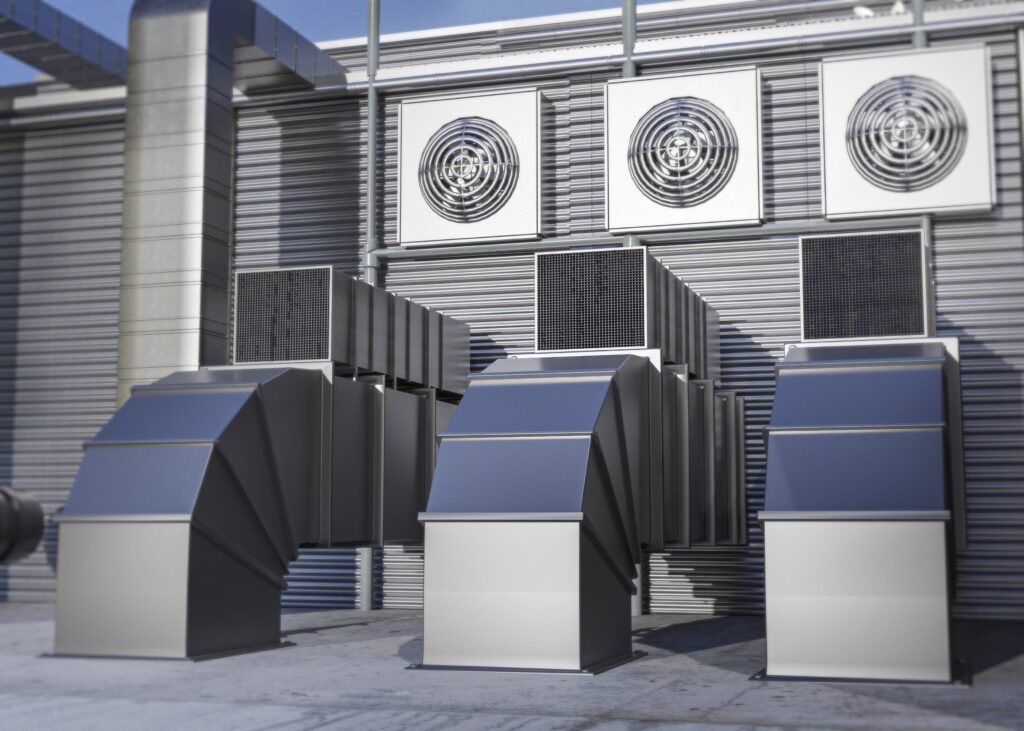
A robust HVAC system (Heating, Ventilation, and Air Conditioning) is crucial for maintaining stable conditions. Modern solutions include:
- Automated climate control with AI-driven adjustments to counteract fluctuations.
- Zoned HVAC systems for different facility areas, ensuring precise control.
- High-efficiency particulate air (HEPA) filters to maintain air quality and prevent contamination.
2. Utilizing Dehumidification and Moisture Control Techniques
Pharmaceutical manufacturers can leverage:
- Desiccant dehumidifiers: Effective in maintaining ultra-low humidity conditions.
- Refrigerant dehumidifiers: Useful for moderate humidity control.
- Sealed storage areas: To prevent external moisture infiltration.
3. Continuous Monitoring and Data Logging
- IoT-enabled sensors provide real-time temperature and humidity tracking.
- Automated alerts help identify deviations before they impact production.
- Cloud-based data storage ensures regulatory compliance with audit trails.
4. Validation and Calibration of Climate Control Equipment
Regular validation protocols include:
- Calibration of sensors and probes to maintain accuracy.
- Routine system validation in compliance with regulatory requirements.
- Annual HVAC audits to detect inefficiencies and improve performance.
5. Optimizing Facility Design for Effective Climate Control
- Insulated walls and ceilings to minimize external temperature effects.
- Properly designed airlocks to prevent cross-contamination.
- Smart airflow management using computational fluid dynamics (CFD) analysis.
6. Employee Training on Environmental Control Measures
- Training on GMP and climate control protocols.
- Emergency response training for climate fluctuations.
- Standard operating procedures (SOPs) for maintaining compliance.
Case Study: How Climate Control Improved Pharma Manufacturing Outcomes
A multinational pharmaceutical company struggled with product instability due to humidity fluctuations. After implementing AI-driven HVAC systems, IoT monitoring, and staff training, the company achieved:
- A 30% reduction in batch rejections.
- Improved regulatory compliance scores.
- Energy savings of 15% annually.
Conclusion
Temperature and humidity control are fundamental to the success of pharmaceutical manufacturing. Maintaining optimal environmental conditions is not just a regulatory requirement but a key factor in ensuring drug stability, production efficiency, and patient safety. The pharmaceutical industry must continuously strive to improve climate control strategies, leveraging advanced HVAC systems, automated monitoring technologies, and industry best practices to maintain compliance and enhance product quality.
By implementing precision temperature regulation, effective dehumidification techniques, and rigorous monitoring protocols, manufacturers can significantly reduce product degradation, minimize waste, and enhance operational efficiency. Furthermore, compliance with Good Manufacturing Practices (GMP) and stringent FDA, EMA, and WHO regulations is essential to avoiding costly recalls and maintaining consumer trust.
The growing adoption of IoT-enabled sensors, AI-driven climate control, and predictive analytics is transforming how pharmaceutical facilities manage environmental conditions. Companies that embrace these innovations will not only optimize their production processes but also gain a competitive advantage in an increasingly demanding market.
As climate control challenges evolve, pharmaceutical manufacturers must remain proactive in assessing and updating their strategies. Regular facility audits, employee training, and investment in advanced technology will ensure a robust and compliant manufacturing environment.
For those looking to enhance their temperature and humidity control systems, explore cutting-edge solutions, or stay up to date with industry trends, our team is here to help. Contact us today for expert guidance, or explore our website for more in-depth resources on pharmaceutical manufacturing best practices. Stay ahead of regulatory changes and ensure your production remains compliant, efficient, and future-ready.
Links and Explanations
1. FDA – Pharmaceutical Quality/Manufacturing Standards (CGMP)
This link directs readers to the FDA’s official guidelines on Current Good Manufacturing Practices (CGMPs), ensuring they understand the regulatory framework for maintaining temperature and humidity control in pharmaceutical manufacturing.
2. World Health Organization (WHO) Guidelines on Good Storage and Distribution Practices
WHO’s guidelines on good storage and distribution practices provide critical insights into how temperature and humidity should be managed throughout the supply chain, reducing the risk of drug degradation.
3. International Society for Pharmaceutical Engineering (ISPE) – HVAC for Pharmaceuticals
This resource from ISPE covers the importance of HVAC system design, validation, and maintenance in pharmaceutical production, helping manufacturers optimize climate control solutions.
4. United States Pharmacopeia (USP) – Drug Stability Guidelines
USP provides standards for drug stability, including how environmental factors like temperature and humidity impact different drug formulations, ensuring compliance with industry regulations.
5. National Institutes of Health (NIH) – Research on Drug Stability and Environmental Factors
The NIH database contains research studies and articles on how environmental factors influence drug stability, offering scientific backing for the importance of strict climate control.
6. ASHRAE – Standards for HVAC Systems in Cleanrooms
ASHRAE provides technical guidelines for HVAC systems in controlled environments, crucial for maintaining cleanroom standards in pharmaceutical manufacturing facilities.